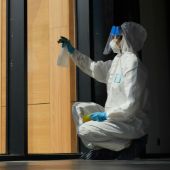
Ireland’s unique climate, diverse ecosystems, and growing industrial sectors create a constant demand for reliable environmental testing. Accurate data on air, water, soil, and waste quality is essential for regulatory compliance, risk management, and sustainable development. By leveraging state-of-the-art laboratories and field-sampling expertise, stakeholders can make informed decisions that protect public health and preserve natural resources.
Core Areas of Environmental Testing
Air Quality Monitoring
Airborne pollutants such as particulate matter, volatile organic compounds, and nitrogen oxides are measured using continuous monitoring stations and portable samplers. Detailed reports help municipalities meet EU directives and guide mitigation strategies.
- Real-time data acquisition for rapid response.
- Comprehensive emission source identification.
- Long-term trend analysis for policy development.
Water Quality Assessment
From drinking water supplies to industrial effluents, water testing verifies compliance with Irish and European standards. Parameters include microbiological counts, heavy metals, pH, and chemical oxygen demand.
- Laboratory-grade analysis with ISO-17025 accreditation.
- On-site rapid testing kits for immediate results.
- Customized monitoring programs for rivers, lakes, and coastal zones.
Soil and Ground-water Investigation
Contamination from agriculture, mining, or legacy waste sites can jeopardize ecosystems and human health. Soil and groundwater investigations involve sampling, laboratory analysis, and risk modelling.
- Geochemical profiling to pinpoint pollutant hotspots.
- Remediation feasibility studies.
- Regulatory reporting aligned with the EPA’s guidance.
Why Choose Professional Testing Services?
Professional laboratories bring a blend of technical rigor, regulatory knowledge, and industry experience. This ensures that results are not only accurate but also actionable. For organisations seeking guidance on interpreting complex datasets, the expertise available at leading Irish providers can be invaluable.
- Validated methods conforming to international standards.
- Qualified scientists with specialist training in environmental chemistry.
- Transparent reporting formats that facilitate stakeholder communication.
For a deeper dive into methodological best practices, Discover expert strategies here.
Regulatory Landscape in Ireland
Environmental legislation in Ireland aligns closely with EU directives, covering air emissions, water framework directives, waste management, and contaminated land. Compliance requires regular testing, documentation, and, where necessary, corrective action plans.
- Air Quality Standards (EU Directive 2008/50/EC).
- Water Framework Directive (WFD) implementation.
- Control of Major Accident Hazards (COMAH) regulations.
- National Waste Management Plan.
Guidance on meeting these obligations can be found by Learn about our tailored solutions.
Emerging Technologies Shaping the Future
Innovation drives more precise, faster, and cost-effective testing. Emerging tools such as remote sensing, drone-based sampling, and real-time biosensors are expanding the capabilities of traditional laboratories.
- Satellite data integration for large-scale air quality mapping.
- Portable spectrometers for on-site chemical analysis.
- Machine-learning algorithms that predict contamination events.
To stay updated on the latest advancements, Explore advanced guides and tips.
Choosing the Right Partner
When selecting a provider for environmental testing, consider the following criteria:
- Accreditation: ISO-17025 or equivalent certification.
- Turnaround Time: Ability to deliver results within project timelines.
- Data Management: Secure, cloud-based platforms for easy access and sharing.
- Consultancy Support: Expert interpretation of results and recommendation of mitigation measures.
For a comprehensive overview of service capabilities and partnership models, Find out more about this approach.
Conclusion
Environmental testing services are a cornerstone of Ireland’s commitment to sustainable development and public health protection. By integrating robust analytical methods, regulatory insight, and cutting-edge technology, stakeholders can achieve compliance, reduce risk, and foster environmental stewardship. Engaging with a qualified testing provider ensures that data-driven decisions are grounded in scientific integrity, supporting a cleaner and safer Irish landscape for generations to come.
About the Author